
Calculate savings on industrial wastewater treatment
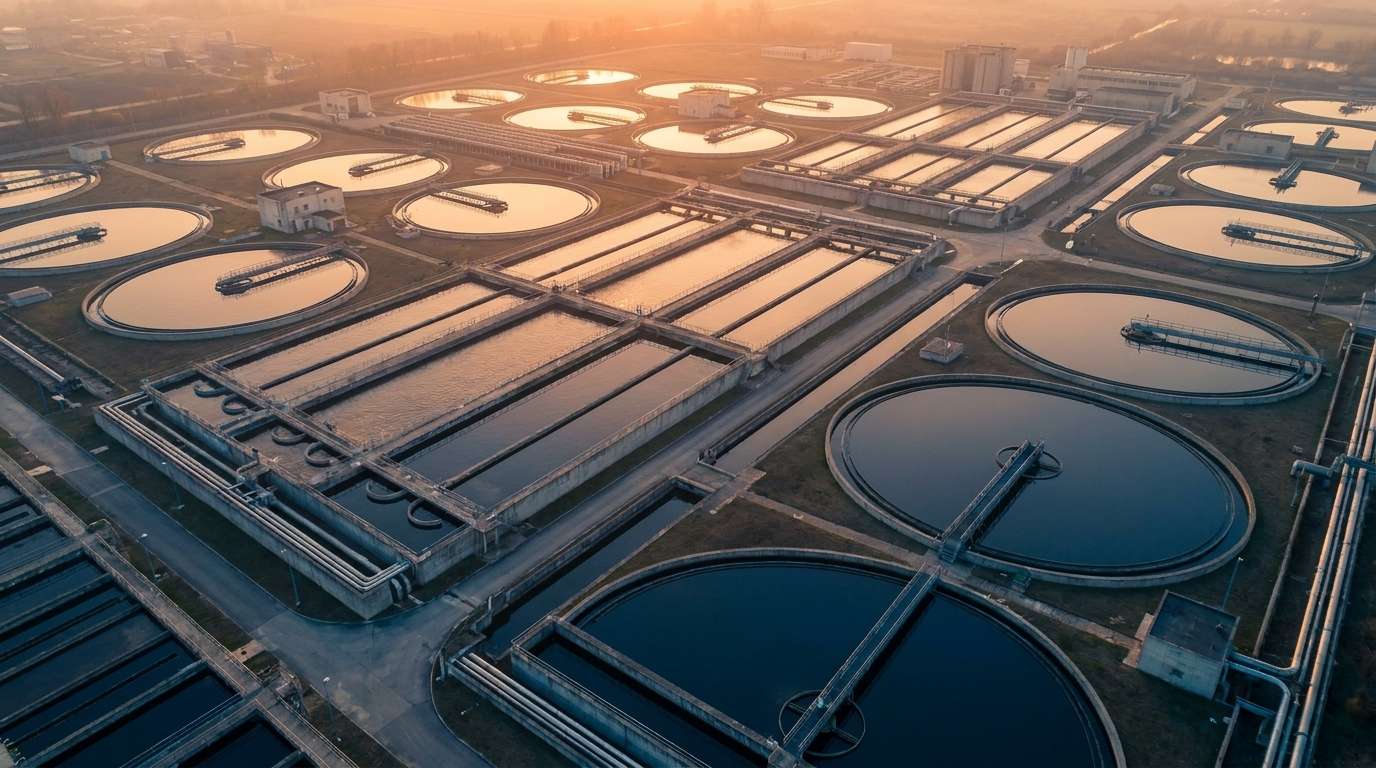
If a water utility spends more on reagents, electricity, and fines than on the rest of its operating budget, the problem isn't the tariffs. The problem is that the treatment scheme bundles three separate processes where a single one would do.
The standard scheme looks like this: coagulant + flocculant + disinfectant. Each stage has its own pumps, its own dosing units, its own staff, its own suppliers. Add the penalties for residual chlorine and chlorinated organics, and you end up with a figure that runs past 10–15 million rubles a year even at mid-sized volumes.
What sodium ferrate replaces
Sodium ferrate (Na2FeO4) is the strongest oxidizer used in practice, with a redox potential of +2.2 V. A single molecule does what three reagents do in the classic scheme:
- Oxidizes organics, petroleum products, phenols, surfactants, and pharmaceuticals
- As it decomposes, it forms Fe(OH)3 nanoparticles that act as a coagulant and flocculant — capturing suspended solids and heavy metals
- Destroys bacteria, viruses, cysts, and spores — with no chlorinated organics in the output
After the reaction, what remains is iron(III) hydroxide. This is a natural mineral, a Class V (low-hazard) waste. No license for handling hazardous waste is required.
Where the savings come from
Reagents: up to 70%. A single Ferrator covers three procurement line items. Reagent consumption for disinfecting domestic wastewater is 0.1 mg/L. This was confirmed by trials at St. Petersburg Vodokanal (state water utility): at a dose of 0.1 mg/L, the readings for total coliforms, E. coli, coliphages, and enterococci came within MPC (maximum permissible concentration) limits.
Electricity: up to 60%. Producing 1 kg of sodium ferrate requires 1 kWh of electricity. An ozone generator handling the same task consumes about 15 kWh/kg. UV lamps draw less power but lose efficiency in turbid water and require lamp replacement every 8,000–12,000 hours.
Equipment: 3 units → 1. A single Ferrator replaces the chlorination unit, the coagulation node, and the UV block. Fewer pumps, fewer points of failure, fewer certified operators required.
Fines: 0 ₽. Treated water meets SanPiN requirements for residual chlorine, chlorinated organics, and microbiology. According to Rosstat, environmental fines across the country totaled 273.84 billion ₽ in 2023. The bulk of that was for wastewater.
The numbers by volume
| Ferrator capacity | Disinfection volume | Industrial wastewater treatment volume |
|---|---|---|
| 160 g ferrate/day | up to 1,600 m³/day | up to 4 m³/day |
| 1 kg ferrate/day | up to 10,000 m³/day | up to 25 m³/day |
| 10 kg ferrate/day | up to 100,000 m³/day | up to 250 m³/day |
For a typical water utility handling 10,000 m³/day, switching to a Ferrator saves 8–15 million ₽ a year in operating costs — with full compliance to environmental standards and no fines.
Payback
Payback period: 6–18 months. It depends on your current scheme and volume. The more reagents you currently buy for coagulation + flocculation + disinfection, the faster the Ferrator pays for itself.
Consumables after installation: only 20% NaOH (caustic soda) and a steel electrode. The electrode is swapped in 2 minutes once every 4 days. No special certifications are required for in-house staff.
How to calculate it for your facility
The site has a calculator: you enter your wastewater volume, the type of contaminants, and your current costs, and you get an estimate of the savings and the payback period.
If you want a precise calculation, send us 30 liters of your most heavily contaminated water. We will treat it with sodium ferrate and return an accredited laboratory report with before-and-after readings. The result is a technical proposal with concrete figures for your own wastewater, not an industry average.