
Oil & GasDecember 2025
OQ, Oman — field pilot
- TSS −91% (140 → 12 mg/L)
- TPH not detected
- Fe −100%
- P −86%
Dosage 20–50 mg/L. Industrial scale-up in preparation.
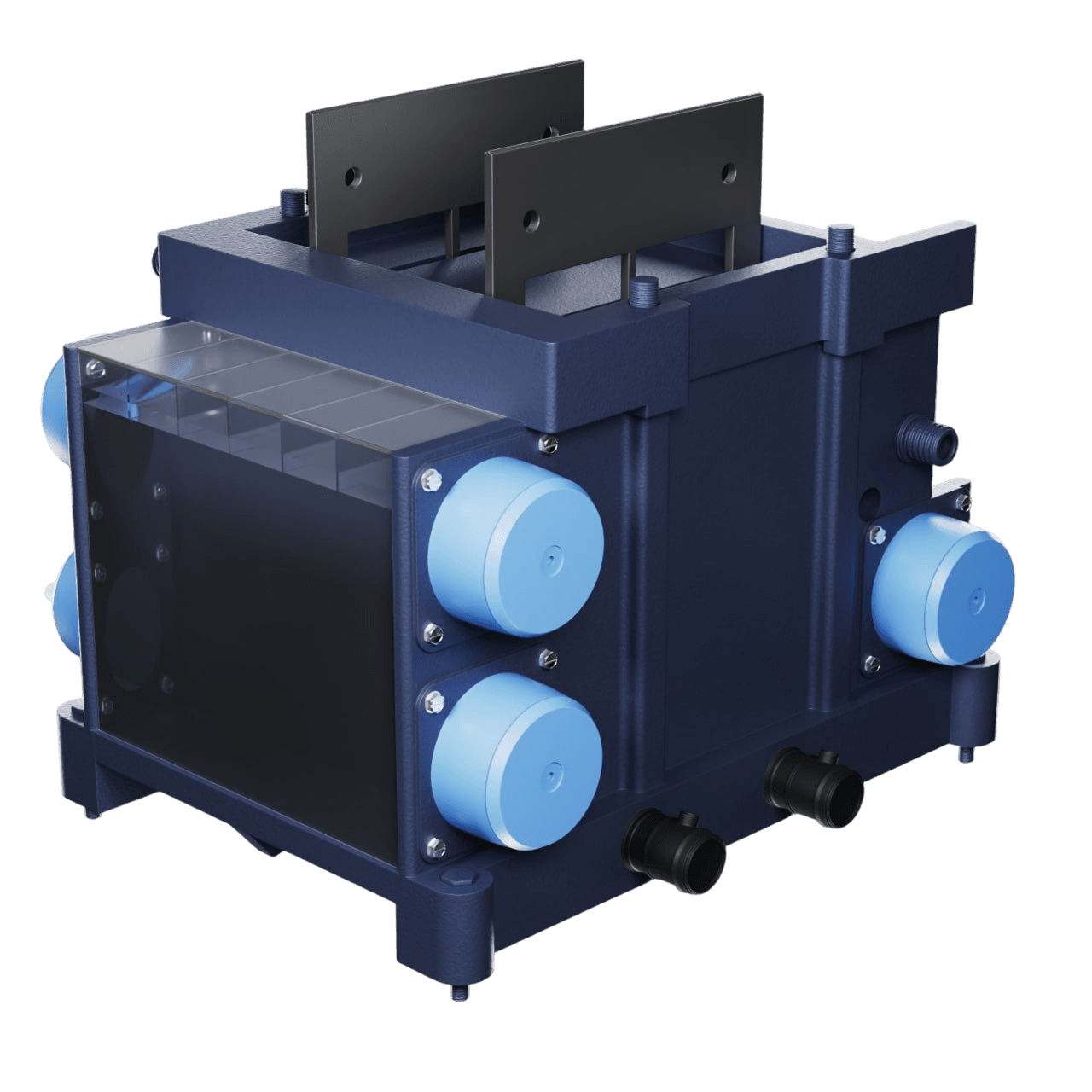
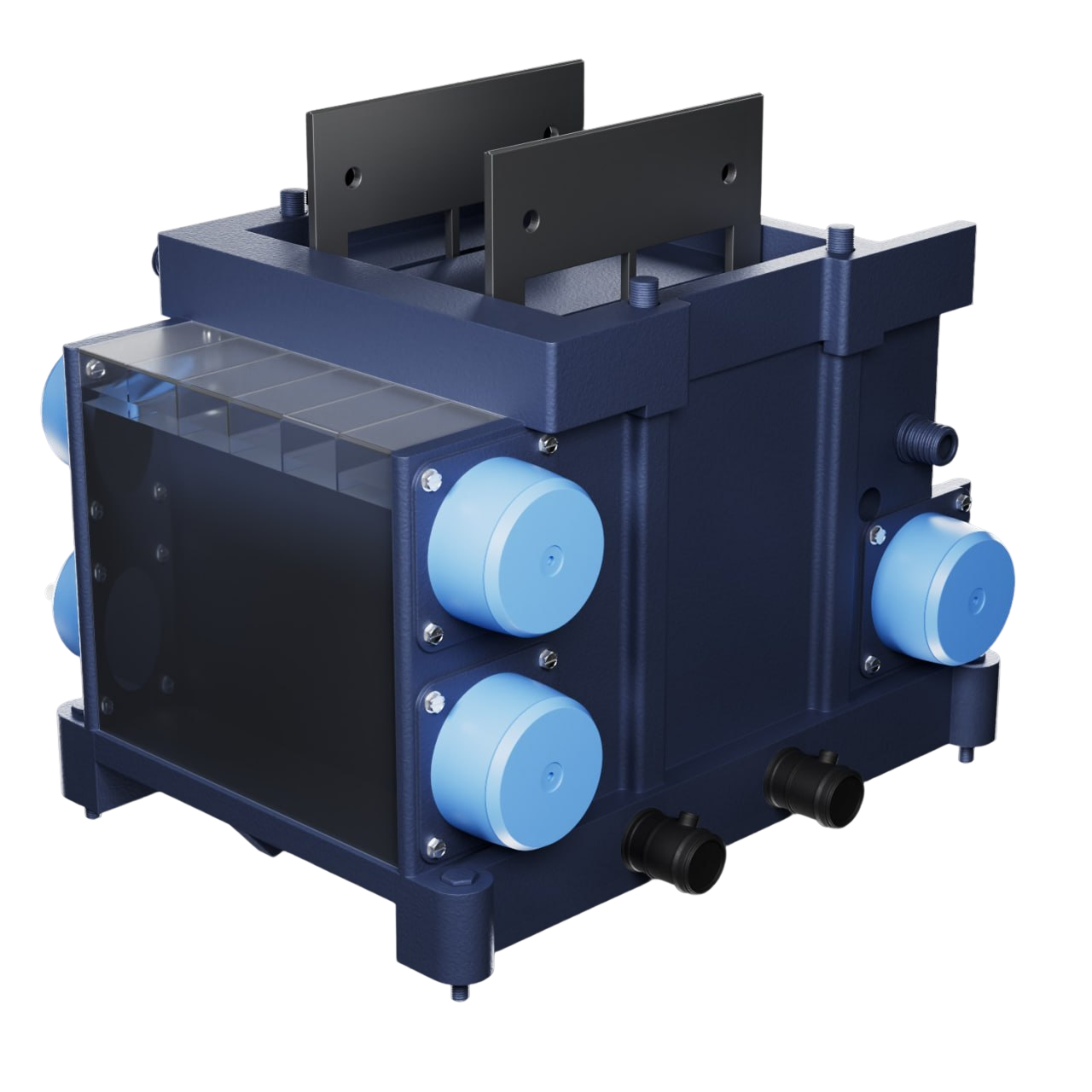
Ferrator produces sodium ferrate right at your facility. A single reagent oxidises contaminants, precipitates heavy metals and disinfects water — with no toxic chloro-organics and no residual chlorine. Reagent spend drops by up to 70%.
More than 20 plants and sites across several sectors have run pilot trials.
Ferrator and its consumables are produced in Russia. There is no dependency on imported supplies or the regulatory risk that comes with them. The equipment meets domestic import- substitution requirements.

Saint Petersburg. Assembly, commissioning and service handled by our in-house engineering centre.
Compatible with Russian public and corporate procurement procedures. Full documentation pack provided.
Russian patent No. 2840323. Skolkovo and FASIE grants confirm the scientific depth of the technology.
NaOH alkali and steel electrode sourced from Russian suppliers. No exposure to imported supply chains.
RUB 273.84 billion — total environmental fines for 2023 (Rosstat). Sanitary regulations keep tightening, yet cost-effective treatment technologies for small- and mid-scale volumes are still missing.
A full ban on residual chlorine in effluent is coming. The alternatives are more expensive and harder to operate.
Ozone generators consume up to 15 kWh/kg and UV lamps lose efficiency in turbid water. Both demand highly-qualified operators.
Lab results arrive up to two weeks late. The result: chemical overuse or non-compliant discharge.
For 10–1,000 m³/day the market offers no economically viable turnkey plants.
Sodium ferrate (Na₂FeO₄) is the most powerful known water oxidant, with a redox potential of +2.2 V. A single molecule does the work of three reagent classes: it destroys contaminants, binds suspended solids and kills pathogens. It is produced on site — no hazardous-goods logistics.
Destroys organics, petroleum products, phenols, surfactants, pharmaceuticals and pesticides. More effective than ozone or hypochlorite.
On decomposition it forms Fe(OH)₃ nanoparticles that capture suspended solids, heavy metals, phosphates and arsenic.
Kills bacteria, viruses, cysts and spores. Unlike chlorine, it produces no toxic chloro-organic by-products.
After reacting, sodium ferrate turns into iron(III) hydroxide — a naturally occurring mineral. The hazard-class V sludge is disposed of by standard means, without requiring hazardous-waste handling licences.
More about the technologyEach of these properties comes from the electrochemical nature of sodium ferrate. Together they make Ferrator the only reagent that simultaneously handles treatment, disinfection and environmental safety.
Ferrator generates sodium ferrate right at the facility. No hazardous-goods logistics and no reagent storage.
Oxidation + coagulation + disinfection. Replaces several treatment stages with a single reagent.
Compared with chlorine, ozone and permanganate — at comparable or higher treatment performance.
Decomposes to Fe(OH)₃. No disinfection by-products, toxic chloro-organics, haloacetic acids or other carcinogens.
Cd, Pb, As, Hg, Cr and other metals are captured by Fe(OH)₃ nanoparticles during coagulation.
Petroleum products, phenols, surfactants and BOD/COD — efficient oxidation of organics in produced and waste water.
The only reagent method that retains its efficiency in the Russian Arctic zone.
A compact stand-alone module. No rebuild of the treatment plant and no long investment cycles.
Full compliance with sanitary regulations. No restrictions on discharge or water reuse.
On total cost of ownership: CAPEX + OPEX + disposal + fines.
An automated membrane-electrolysis unit produces sodium ferrate right at your facility. No transport, no storage of hazardous chemicals, no chemical-handling licences.
We pick the configuration based on your effluent volume, contamination type and budget. Every unit comes with dosing pumps and a control system.
Swimming pools, small utilities, food production
Water utilities, oil & gas, metallurgy
Large utilities, power plants, refineries
System price and operating costs are calculated individually after we analyse your water samples. Capacity scales by installing multiple Ferrators in line.
Ferrator pays off in 6–18 months by cutting spend on reagents, power and fines.
For a typical 10,000 m³/day water utility, switching to Ferrator saves 8 to 15 million roubles per year in operating costs — while fully meeting environmental standards.
Data is based on pilot deployments and laboratory tests from 2023–2025.
| Criterion | Ferrator | Chlorine | Ozone | UV | Al/Fe salts |
|---|---|---|---|---|---|
| Maintenance cost | Low | Medium | High | High | Medium |
| Disinfection | |||||
| Heavy-metal removal | Partial | ||||
| Operation in cold water (0–5 °C) | Reduced | ||||
| No residual chlorine | |||||
| No toxic by-products | Chloro-organics | Bromates | Sludge | ||
| Number of units | 1 | 2–3 | 3–4 | 2–3 | 2–3 |
| Staff qualifications | Basic | Medium | High | Medium | Medium |
Ferrator is the only technology that combines oxidation, coagulation and disinfection in a single process.
The technology is universal, but these sectors see the costliest problems solved.
Disinfection of effluents with antibiotics and pharmaceuticals. Full destruction of active substances.
Every case is backed by reports from accredited laboratories.
Dosage 20–50 mg/L. Industrial scale-up in preparation.
Brought down to domestic-effluent permissible limits.
Pilot complete, scale-up underway.
Ferrate dosed to the contact tank — from Dobrokhim’s pilot programme.
Ferrate as an add-on to the existing treatment train.
Foundation for later on-site pilots including UV replacement.
Pilot programme launched.
Pilot in progress.
Under approval.
Summarised from the pilot matrix; the full list is on the Case studies page.
First results in 3 weeks. Full launch in 3 months.
We review the task, water parameters and your current system.
Duration: 1–2 days
50–100 L of samples, dosing tuned to your actual effluent. Accredited laboratory.
Duration: 3 weeks
Detailed breakdown of price, consumables, operating costs and payback.
Duration: 1 week
Ferrator manufacturing, delivery, installation, commissioning and staff training.
Duration: 1.5–3 months
12-month warranty. Technical support for the whole service life.
Duration: 24/7
Two simple paths to confirm sodium ferrate performs on your actual water — without lengthy approvals or big spend.
Hand us 30 litres of your most contaminated water — we treat it with sodium ferrate and return an accredited-laboratory report with before/after results.
We ship you a sodium-ferrate sample — and your lab runs the test on your water, using your own protocol.
Since 2020 the Dobrokhim team (Saint Petersburg) has moved from R&D to live pilots in Russia, the UAE and Oman. The technology is patented and internationally recognised. We run the whole project end to end: lab tests, industrial launch and service.
Winner — international recognition of the technology
Device for producing sodium ferrate
Top 100 of 19,000 submissions
Scientific review and technology validation
Engineers, scientists and entrepreneurs working together to take sodium ferrate from the lab to industrial scale.

10+ years in industrial engineering

Former R&D director at an engineering group

25 years in electrochemistry

15 years in industrial automation

MBA, 15+ years in B2B sales
15 slides covering the technology, test results and economics. Delivered to your inbox as a PDF.
We run laboratory tests on your water samples and prepare a business case for deployment. We respond within 2 business hours.